
The Reader’s Changing Relationship with Work
Getting Things DoneThe book reframes work from assigned tasks into any desired change, widening the reader’s understanding of what deserves management.
increasing Bearing strength in each event
 decreasing
Bearing strength in each eventdecreasingOld Work Has Edges
Visible Tasks and Finished Results
An Earlier Model
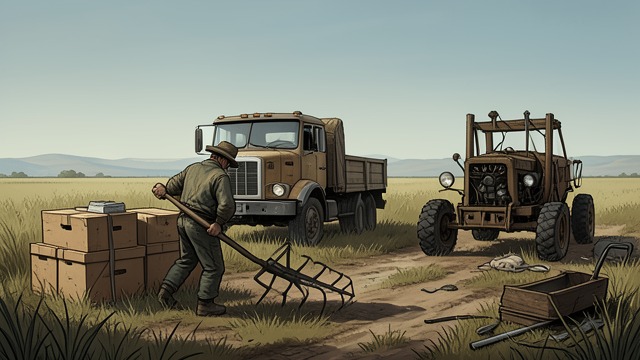
Allen contrasts knowledge work with older forms of work whose tasks and completion points were easier to see. Fields could be plowed, boxes packed, or machines tooled, making the work itself more evident.
The task often arrived already defined.
A New Ambiguity
Modern projects may have no clear boundary and can always absorb more information or improvement. Workers must decide what their job includes and when a result is good enough.
The changing character of work creates a need for self-management and clarified outcomes.
Knowledge Work Is Determined

Results Must Be Specified
Choosing the Work
The book draws on Peter Drucker’s argument that knowledge workers must determine what results their work is meant to produce. The task is not always handed to them in complete form.
Productivity therefore depends on making choices and defining outcomes.
Responsibility Beyond Execution
A worker’s value includes figuring out what should be done, not merely following a visible sequence. This makes thinking an essential part of work rather than a delay before work begins.
The reader is invited to treat clarification as part of the job itself.
Personal Life Joins the Inventory

One Meaning Across Life
Desired Change
Allen defines work in a universal sense as anything a person wants or needs to be different from how it is now. Gardening, updating a will, writing, and coaching can all qualify.
The distinction between professional and personal work is therefore less important than the existence of a commitment.
A Wider Field of Attention
This definition brings family, health, home, recreation, and administration into the same management conversation as office projects. Personal responsibilities are not secondary simply because they lack a workplace label.
The broader definition explains why the system must follow attention across settings.
Roles Become Visible

The Many Hats a Person Wears
Responsibilities Beyond Projects
A person’s work includes areas that require ongoing standards, such as staff development, health, family, finances, or home management. These responsibilities generate projects and actions over time.
A project list alone may not show whether every important area is being maintained.
A More Complete Self-View
Reviewing areas of responsibility can expose neglected commitments or reveal that some domains are under control. The inventory helps define what the person’s job, in a broad sense, actually contains.
The reader begins to see identity and responsibility as connected to concrete work.
Work Becomes Chosen Again

Acting with Broader Awareness
Reconsidering Direction
Once immediate actions are managed, the reader can consider goals, longer-term visions, and life purpose. The book does not prescribe those answers, but emphasizes that they can shape choices at lower levels.
A complete operational system can create room for deeper reflection.
A More Deliberate Relationship
Work is no longer only an incoming burden to endure. It includes desired changes that can be accepted, revised, declined, or pursued through action.
The reader’s relationship with work shifts toward conscious commitment and greater alignment.
In the opening account of work’s transformation
As the book examines modern professional work
When Allen defines work broadly
At the areas-of-focus level
Near the book’s final reflection
